Portable Generator Connections
A safer, code-conscious way to connect portable backup power to selected home circuits.
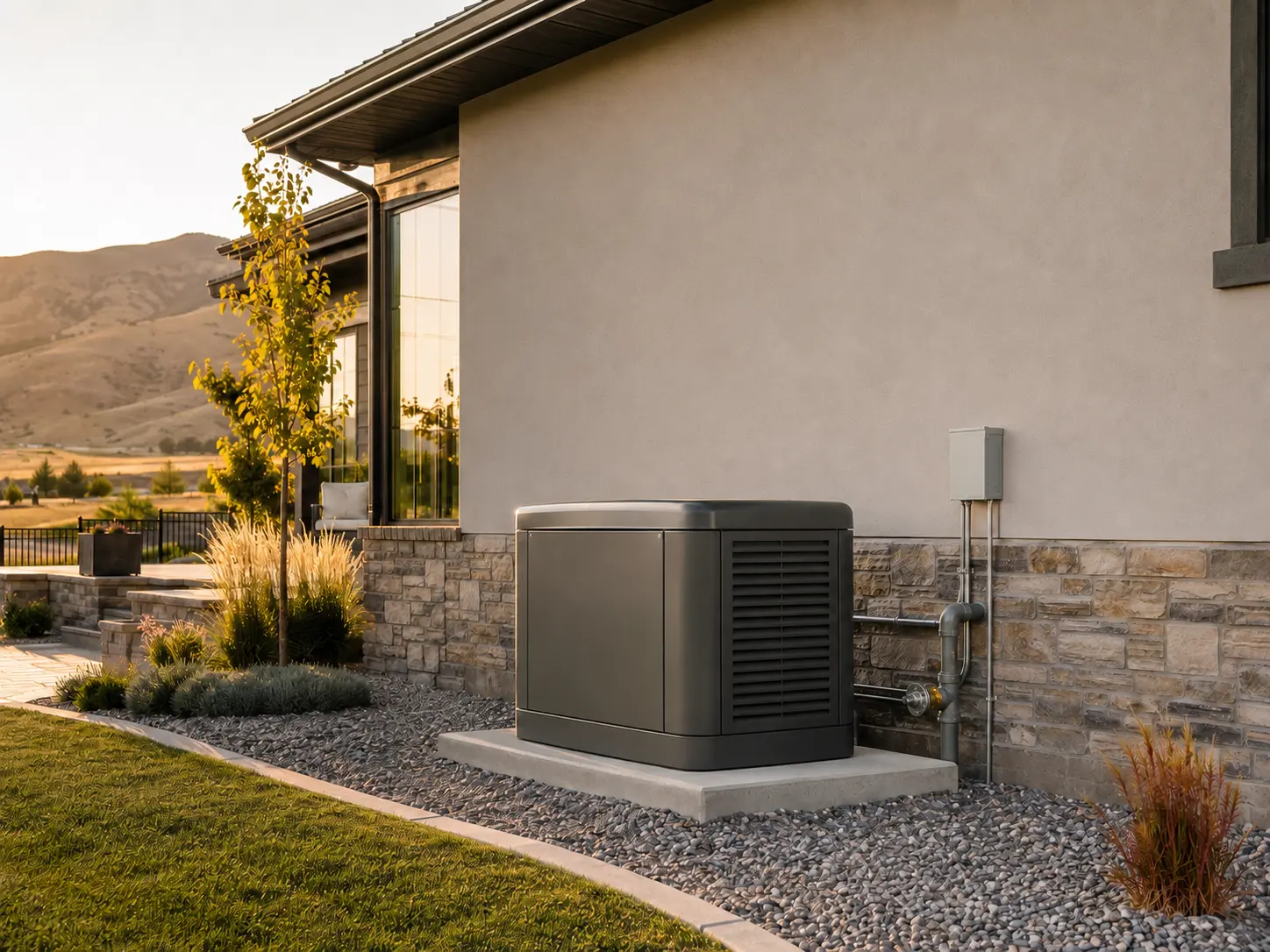
Designed around your home—not a product box
A professionally installed inlet and approved transfer or interlock arrangement can make portable power easier to use while preventing dangerous backfeeding.
- ✓ Lower entry cost
- ✓ Uses existing portable equipment
- ✓ Selected circuit support
- ✓ Clean exterior connection
- Manual setup
- Fuel storage
- Limited capacity
- Never connect without approved transfer protection
From loads to a commissioned system
Discover the loads and routines that matter
Each phase is documented and adapted to the equipment, property, code requirements, and project schedule.
Design the system and confirm site requirements
Each phase is documented and adapted to the equipment, property, code requirements, and project schedule.
Coordinate electrical, transfer, fuel and permitting
Each phase is documented and adapted to the equipment, property, code requirements, and project schedule.
Install, commission and orient the homeowner
Each phase is documented and adapted to the equipment, property, code requirements, and project schedule.
Clear answers before you commit
Can I plug a generator into a dryer outlet?
No. Improvised backfeeding is dangerous and can injure utility workers or damage equipment. Use a professionally installed, code-compliant connection.
Plan your backup-power system with confidence.
Final sizing and runtime depend on equipment specifications, site conditions, loads, fuel, permitting, utility rules, and professional assessment.
Request a Consultation